For this project in DIGIT 100, I developed two websites side by side. One I constructed using Github and the other using Penn State’s Wordpress. Both were very different experiences that had their unique challenges. Github, although being slightly more complex, was much easier to customize and work with. Wordpress values being “user friendly” over actual control and design.
I have been working with github for over a semester and a half now. I understand the differences between the different types of documents that are needed. I am very used to the natural work flow of the site. Github feels community based. It is more encouraging when I can see my friends and other project groups working alongside me. I understand git and git bash very well and I am having so much fun with CSS styling. Which is something I am very interested in learning more about. Right now I am working on an alternative home page for my Github website. I am hoping to complete it after this assignment is due. This allows for complete control over design aspects and lets me have more creative freedom. Plus, git forces me to have better file management and keep my documents in order and reasonable. When I run into issues, there is often a clear solution.
Using WordPress felt like taking a step backwards. I understand why it would be helpful to learn git and WordPress at the same time would be useful, however it was frustrating. I could not get the links at the bottom of the page to go away. There were way less formatting options. The entire formatting of the site felt outdated and archaic, using icons that have long been phased out. I also had a really difficult time formatting my images for my gallery. It just felt very sterile, in comparison to Github, where I can easily comment on others' code. I can definitely see the value though, if you are not well versed in Git, which definitely can take a second to learn.
After working on both of these sites, I have concluded that I will be sticking with Github. It feels like a better place to work through. As much as there is to debug and figure out, I will not sacrifice my creative control.
View my alternate site here: https://sites.psu.edu/trtaylorportfolio/
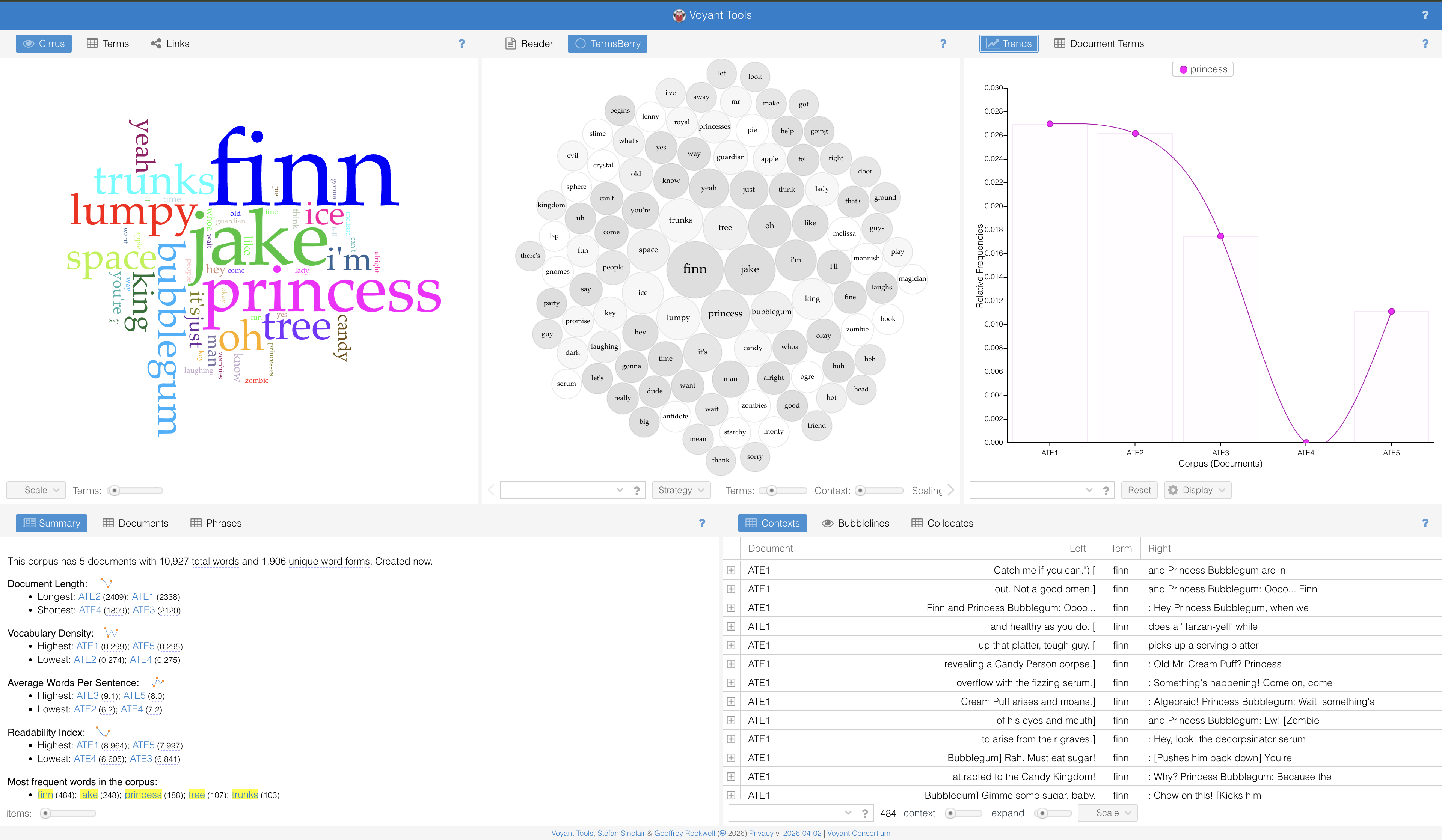
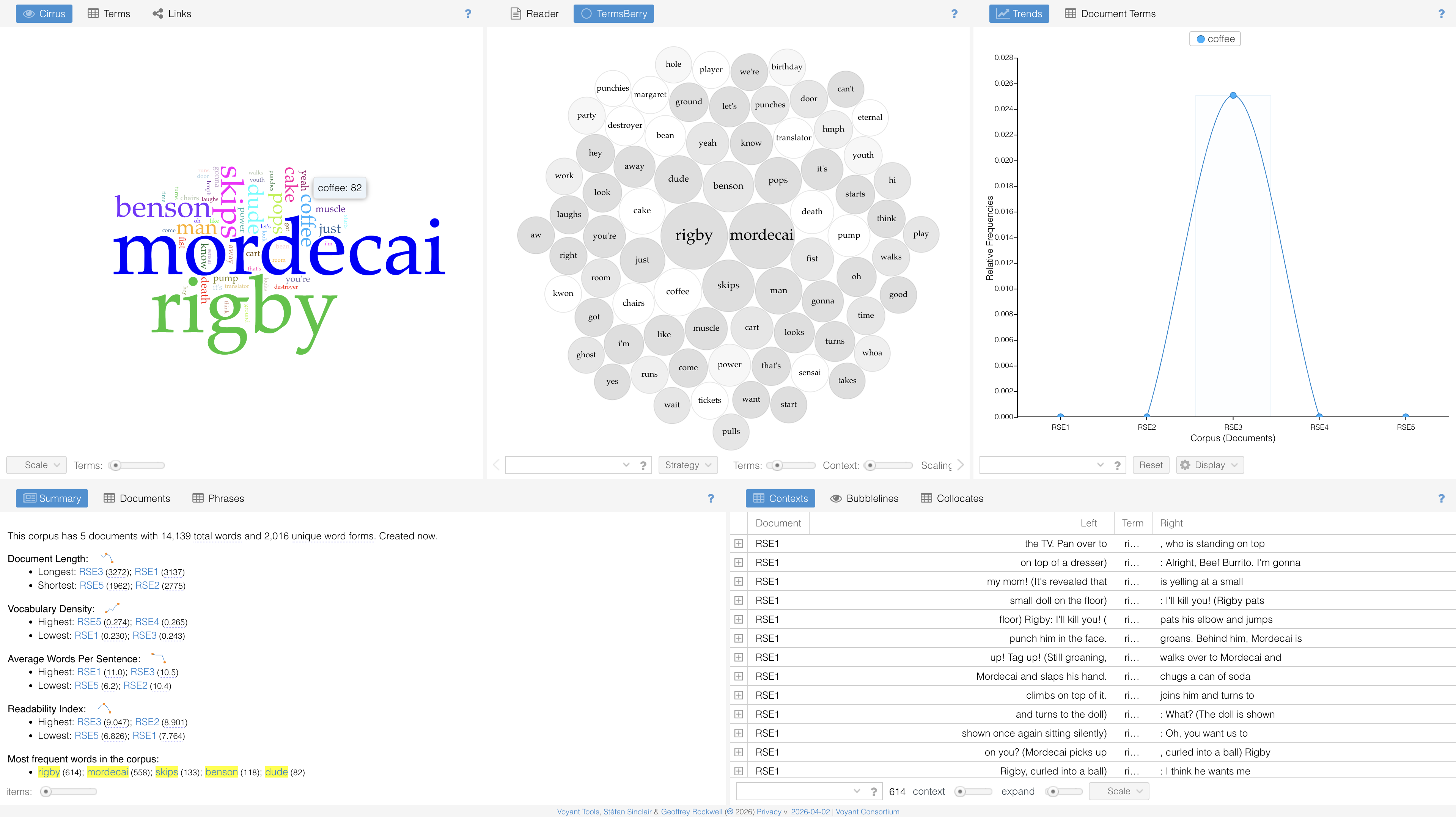
For this corpus analysis, I compared transcripts from Adventure Time Season 1 and Regular Show Season 1 using Voyant Tools and AntConc. Both shows are chaotic and funny in really different ways, so I wanted to see if those differences showed up in the language they use. By analyzing word frequency, word clouds, and repeated phrases, I was able to identify clear differences in tone and vocabulary between the two.
Looking at the Voyant word clouds, both shows repeat character names and common dialogue words, but the overall vocabulary still feels different. Adventure Time uses more imaginative and world-specific language, while Regular Show relies more on everyday speech. Even from this overview, you can already see that Adventure Time leans more into creativity and fantasy, while Regular Show feels more grounded.
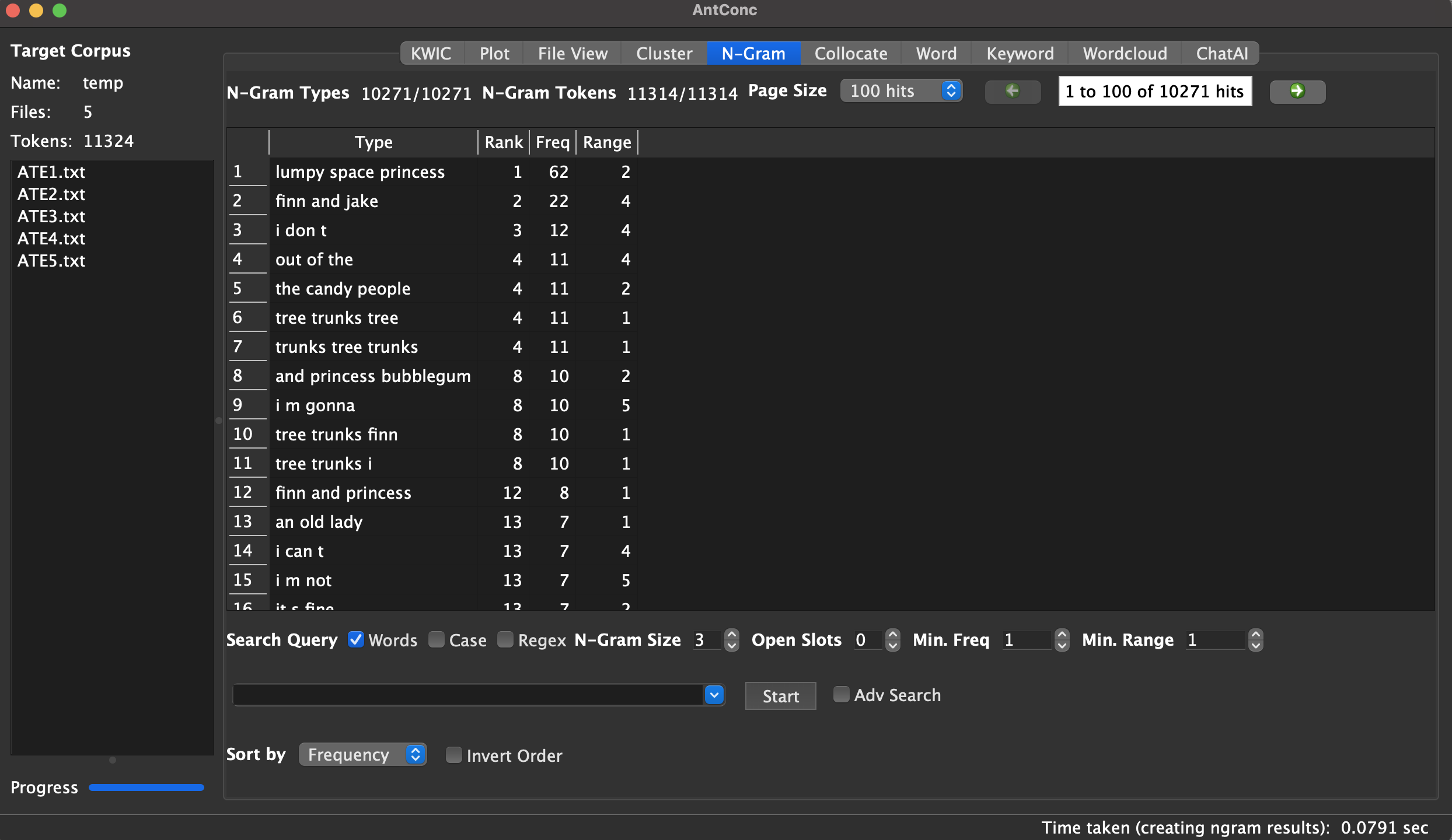
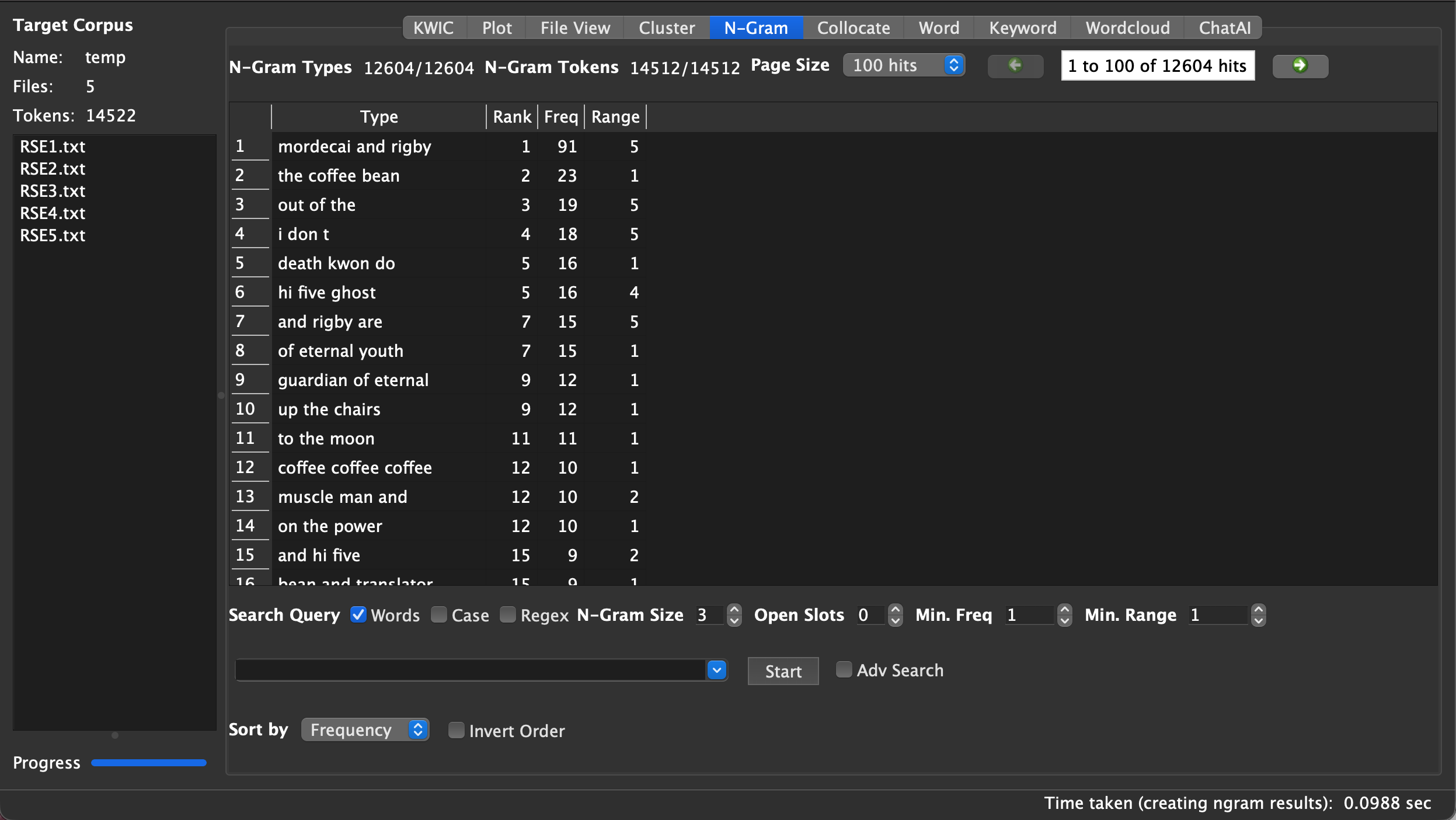
When I looked at the n-gram results in AntConc, I noticed that both shows repeat character names a lot, like “Finn and Jake” and “Mordecai and Rigby.” But the way those phrases are used is actually different. In Adventure Time, repeated phrases are often tied to its fantasy world, like “Lumpy Space Princess” or “the candy people,” which makes the language feel really specific and imaginative. I experimented with different n-gram sizes in AntConc, starting with smaller clusters before increasing the size to identify more meaningful repeated phrases. Even though three is still relativly small, I felt like it gave accurate insight into both shows. In Regular Show, the phrases are more simple and casual, and feel more like normal conversations. So even though both shows are chaotic and funny, Adventure Time uses more creative language, while Regular Show feels more grounded and realistic.